
Workshops
Workshops involve a combination of educational content, rich story-telling, case scenarios, lecture, and active audience engagement. Kay’s extensive background in geriatrics, hospice, palliative care and mental health allows her to address the diverse and complex experiences of her clients and audiences in a very relatable way.
Known for bringing passion, integrity, humor, and a unique authenticity to her work, Kay can make often uncomfortable topics safe to explore for family and professional caregivers alike.
Workshops are suitable for both family and professional care partners and organizations. Most workshops are 60-90 minutes in length, however, customized programs are available upon request. Contact Kay for more information at (303) 875-5508 or kay@kaymadams.com.
I love how down to earth and relatable Kay is when presenting. She makes you feel like we are all on the same team together!
Workshop Attendee
Kay's presentation style is absolutely top notch! She's able to convey difficult information in a way that's easy to accept and understand its relevance.
Workshop Attendee
Workshops
Featured Workshops
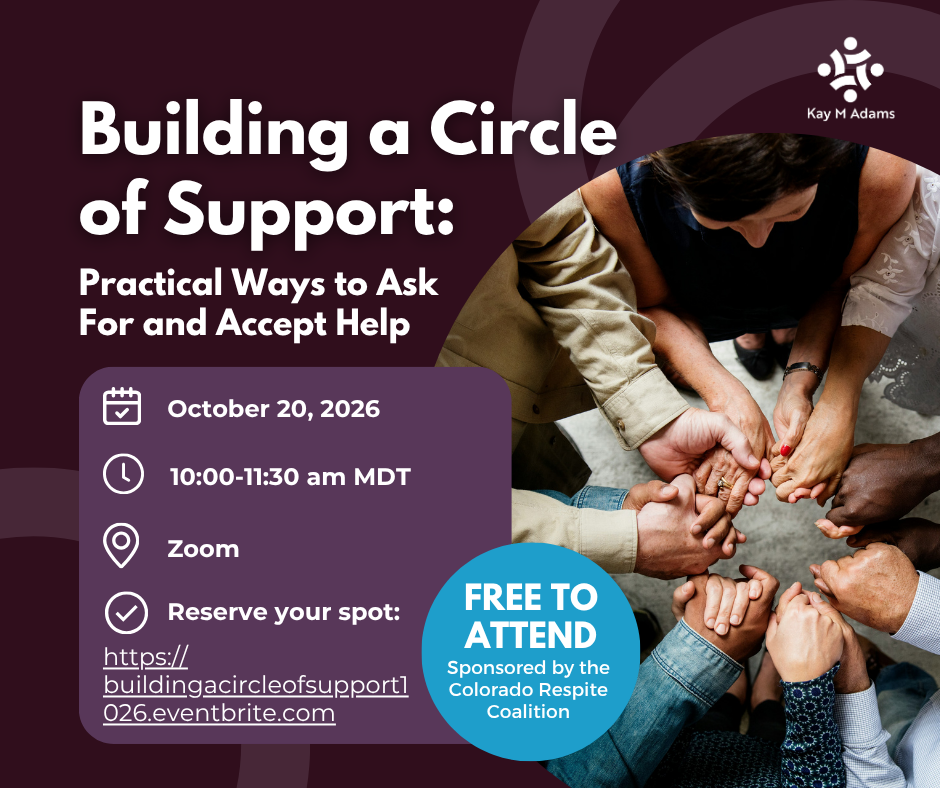
Building a Circle of Support: Practical Ways to Ask For and Accept Help
🗓️ October 20, 2026 | 🕕 10:00 – 11:30 am MDT | 📍 Zoom
Caregiving is not meant to be a solo act—yet most people struggle to ask for and accept help due to guilt, embarrassment, obligation, fear of burdening others, or a strong belief that they have to “go it alone.” Over time, these barriers can affect both your well-being and the well-being of the person you are caring for—especially when dementia is involved.
Free to attend (Sponsored by the Colorado Respite Coalition)
Learn more
In this engaging workshop, we’ll explore the benefits of accepting help, discover how asking for support is a strength and not a weakness, and how to do so with greater ease and self- compassion. We’ll discuss practical ways to create your own circle of support and discover how the skill of asking for and accepting help can promote better balance, protect against social isolation, and build a more sustainable model of caregiving that works better for everyone.
Learning Objectives:
- Identify personal and practical barriers to asking for and accepting help.
- Understand how asking for support is a strength and not a weakness.
- Discover practical ways to create your own “circle of support” to share the caregiving load.
- Describe the benefits of receiving help for both the caregiver and the care receiver—especially in cases where dementia is involved.

Before The Window Closes: The Importance of Advance Care Planning for Families Facing Dementia.
This workshop will address the vital importance of completing advance directives including a Living Will and a Medical Durable Power of Attorney in a timely and pro-active fashion for individuals and families impacted by dementia.
Learn more
We will explore the concept of “decisional capacity” as it relates to the disease process, and why it’s crucial for people living with dementia to discuss and document their wishes for future medical care before the window of opportunity closes.

Both Sides Now: The Role of Communication and Connection in Parkinson's Disease.
Almost every family impacted by Parkinson’s Disease struggles with communication at some point.
Learn more
Parkinson’s Disease affects more than just movement—it affects communication, thinking, emotions, cognition, and relationships. This workshop addresses how communication difficulties impact both the person living with PD, as well as their family care partners from both perspectives.
We’ll discuss the most common communication breakdowns, why they happen, and apply practical strategies to improve communication, reduce relationship stress and blame, and learn to shift from “fixing” to connecting.

Building a Circle of Support Practical Ways to Ask For and Accept Help
Caregiving is not meant to be a solo act—yet most people struggle to ask for and accept help due to guilt, embarrassment, obligation, fear of burdening others, or a strong belief that they have to “go it alone.” Over time, these barriers can affect both your well-being and the well-being of the person you are caring for—especially when dementia is involved.
Learn more
In this engaging workshop, we’ll explore the benefits of accepting help, discover how asking for support is a strength and not a weakness, and how to do so with greater ease and self- compassion. We’ll discuss practical ways to create your own circle of support and discover how the skill of asking for and accepting help can promote better balance, protect against social isolation, and build a more sustainable model of caregiving that works better for everyone.
Learning Objectives:
- Identify personal and practical barriers to asking for and accepting help.
- Understand how asking for support is a strength and not a weakness
- Discover practical ways to create your own “circle of support” to share the caregiving. load.
- Describe the benefits of receiving help for both the caregiver and the care receiver—especially in cases where dementia is involved.

Can You Relate: How Empathy and Compassion Can Help Prevent Crisis, Avoid Burnout, and Bring Fulfillment to our Work.
This workshop addresses how dementia affects our brain, abilities, and influences our behavior.
Learn more
Attendees will learn how to apply the 4 steps of empathy to their professional work, and to identify some of the major challenges that clients living with this illness and their families face, and how to support them. In this workshop, we will discuss how dementia puts those living with this disease at risk for many things that can lead to crisis situations. Finally, we will explore the concept of caregiver burnout and ways to avoid it.

Cultivating Competence and Compassion in Dementia Care: It’s More than What you Know, It’s How you Show It.
As dementia continues to rise in epidemic numbers, so too, does the challenge of providing competent care to those most impacted.
Learn more
It is therefore vital to understand the implications this disease has on grief, loss, and relationships, and how to compassionately support people living with dementia and their care partners. Being aware of the role that palliative care can play in supporting people living with dementia and their families is another important aspect that this workshop will address.

The Dance of Caregiving: Building Resilience for the Long Haul
Discover how to balance the internal and external stressors of being a care partner while navigating the shifting roles in a relationship due to illness and caregiving.
Learn more
Learn how to traverse the difficult emotional terrain that you face as a dementia care partner, and how to build resilience in the face of adversity. Understand the importance of asking for and accepting help for the long haul of caregiving, as well as for maintaining one’s own health and well-being as a care partner.

Dementia Blindness: A Compassionate View Inside the Caregiver Brain
This workshop will tap into the evidenced-based reasons that we as dementia care partners respond to our loved ones with dementia in ways we aren’t always proud of.
Learn more
It will help us understand why our healthy brains are often working against us as caregivers, why we add to our suffering by beating ourselves up mentally, and what we can to do change these patterns of behavior for the better.

Dementia in Healthcare: What to Know, What to Do, and How to Help
This workshop provides an in-depth view of the most common brain changes that are caused by dementia and how they directly impact the person living with this challenging disease in terms of changes in memory, vision, communication, functional abilities, independence, and self-care.
Learn more
It also highlights the role of professionals in recognizing symptoms of dementia in the clients they care for and how to support family care partners in the home.

Dementia: What Most People Don’t Know, but Should
This workshop provides a brief overview of what dementia is and the most common kinds of dementias that impact the majority of people who have a dementia diagnosis.
Learn more
It discusses the role of anticipatory grief and ambiguous loss in dementia care, the profound impact that this disease can have on relationships, and how to support caregivers in your community.

Helpful Tools to Communicate with People Living with Dementia
Communicating with a person living with dementia can be challenging—but it doesn’t have to become a huge source of frustration or conflict.
Learn more
As dementia changes the way the brain processes information, successful communication requires us as care partners to adapt our approach, rather than expect the person with brain change to adapt to ours.
This engaging workshop provides practical strategies for creating more meaningful and successful interactions with people living with dementia. Participants will learn how sensory changes, visual perception, the brain’s stress response, and the environment all influence communication. Through real-life examples and practical tools, participants will discover how to improve their communication skills with their loved ones, and tailor their approach to the unique strengths and needs of each individual with dementia. The result is greater understanding, less frustration, and more opportunities for connection.

The Impact of Dementia on Intergenerational Family Conflict
Dementia doesn’t just change the life of the person living with the disease—it changes the entire family system.
Learn more
Long-standing family dynamics, unresolved conflicts, shifting roles, and changing decision-making responsibilities can become more difficult as someone’s cognitive decline progresses. What once felt manageable can quickly evolve into misunderstanding, crisis, and conflict.
This workshop explores the complex factors that contribute to intergenerational family conflict in the context of dementia, including changes in the balance of power, long-distance caregiving, safety concerns, and the emotional challenges surrounding decisions about residential care. Participants will gain insight into why conflict so often emerges during the dementia journey and learn practical strategies to improve communication, reduce family tension, and foster more collaborative decision-making.

Keys to Understanding Apathy and Depression in Parkinson’s Disease and Dementia
Understand the difference between apathy and depression in people living with Parkinson’s disease or Lewy Body dementia.
Learn more
Learn the three types of apathy associated with Parkinson’s and how apathy caused by dementia presents itself in older adults. Recognize the red flags of caregiver stress to watch out for while navigating the inherent challenges of supporting those who are impacted by apathy or depression.

Making Sense of the Mess: Understanding the Grief of Dementia, and the Power of Perspective and Self-Care
This workshop addresses how caring for a person who is living with any kind of dementia inherently involves entering a world of uncertainty and grief.
Learn more
Doing so can feel chaotic, messy, and overwhelming for care partners. It’s hard to understand what is going on, what to do next, and how to effectively help someone with a brain disease that is ever-changing. This workshop helps “make sense of the mess” that can come with caring for someone impacted by dementia by exploring the underlying grief and loss involved, by empowering people to change their perspectives, and by understanding why self-care is not a selfish act, but an act of self-preservation.

Memory Changes and the Aging Brain: Warning Signs & What to Do
Learn the difference between normal aging and dementia, the 10 warning signs of Alzheimer’s disease, and the specific brain and functional changes that occur when someone is living with dementia.
Learn more
Understand the profound impact that dementia can have on our closest relationships, the grief and loss involved, and the symptoms of caregiver stress to watch out for to prevent burnout. Gain tips to promote brain health so that you can avoid getting dementia yourself.

Mending Fences: A Person-Centered Approach to Facilitating Hope and Healing
This workshop will enable participants to recognize the role of family systems theory as it pertains to counseling individuals and families who are facing life-limiting illnesses, and learn how to apply a person-centered approach to people living with dementia in order to facilitate hope and healing in relationships.
Learn more
The workshop will also identify ways to support individuals impacted by dementia so that they can “make meaning” in their lives while they are still able to participate in the process in a relevant way.

More Than Memory: Understanding Brain Change & Dementia from the Inside Out
For family members, friends, care partners, or anyone in the community who is concerned about or caring for someone living with cognitive impairment or dementia.
Learn more
Join us to learn:
- The difference between normal aging and dementia
- How dementia affects our brain, abilities, and influences our behavior
- Techniques, approaches, and communication tips to support people living with brain change and dementia
- Strategies to effectively manage caregiver stress, difficult emotions, and the art of accepting assistance from others

No Need To Go Alone: The Emotional Challenges of Dementia Caregiving, and Accepting Help for the Journey
This engaging workshop will address how caring for someone who is living with any form of dementia can be inherently stressful and fraught with emotional challenges along the way.
Learn more
You will learn the signs and symptoms of the most common forms of dementia, and gain tools to better communicate with people who are living with brain change. This program will also address the importance of asking for and accepting help from others in order to maintain our own emotional, spiritual, and physical well-being as care partners.

Ripple Effects: Navigating the Challenges of Dementia While Staying Afloat as a Care Partner
This workshop is designed for anyone who is interested in learning more about the difference between normal aging and dementia.
Learn more
It will identify the most common forms of dementia, and shed light on how dementia can affect our brains, abilities, and influence our behavior. The program focuses on common emotional struggles that many care partners face, and how to cope with difficult feelings in a healthy fashion. It will additionally explore strategies to manage caregiver stress, as well as the art of accepting assistance from others so that you are not only able to take better care of your loved ones, but also of yourself.

The Spiritual Journey of Dementia: 3 Key Aspects of the Disease, and How to Support Those in Need.
This thought-provoking workshop will help care partners understand the journey of dementia, and how to support those in need within our families and communities.
Learn more
It will shed light on:
- The educational aspects of dementia—what we all need to know about this challenging and misunderstood disease, and how to support those impacted by it.
- The practical aspects of caring for someone who is living with dementia.
- The emotional aspects of living with dementia, or caring for someone who does.
Kay will weave in stories from her work as a dementia coach and educator to remind us of the importance that spirituality can play in the dementia journey, so that we may work towards creating meaning, mastery, and resilience along the way.

The Stories We Tell: Creative Ways to Apply Narrative Therapy, Story Telling, and Improv into Social Work Practice
Understand how to apply the therapeutic skill of story-telling with patients and families while identifying ways in which utilizing narrative therapy can be a therapeutic benefit for hospice and palliative care social workers or other helping professionals.
Learn more
Learn to apply the five core techniques of improvisational comedy to working with people living with dementia, and have FUN while you’re learning!

The Symptoms and Challenges of Lewy Body Dementia: Helpful Tools for Care Partners
This workshop will explore the often misunderstood differences between Lewy Body Dementia (LBD) and Parkinson’s Disease Dementia (PDD), and the challenges that people living with these illnesses commonly face in the early and later stages of the disease.
Learn more
It will also provide helpful tips and strategies for those who are navigating the complexities of caring for someone impacted by these conditions.

Timing is Everything: The Importance of Advance Care Planning, Decisional Capacity, and Supporting People Living with Dementia and Their Families.
This workshop addresses the critical importance of timing in Advance Care Planning when working with people living with dementia and their families.
Learn more
Advance care planning (ACP) is an ongoing process in which patients, their families, and their health care providers reflect on the patient’s goals, values, and beliefs, and discuss how they should inform current and future medical care. Advance care planning is the vitally important process by which patients make decisions that can guide their future health care, if they become unable to speak for themselves. This program also reviews and describes the most common forms of dementias, builds skills for recognizing decision making capacity, and discusses the red flags involved in that process.

Wading in Emotional Quicksand: The Powerful Role of Anticipatory Grief and Ambiguous Loss in Dementia Care
This workshop delves into the world of anticipatory grief & ambiguous loss– what it looks like, what it is, and how it applies to providing care to people living with dementia.
Learn more
The workshop helps identify coping strategies to effectively deal with caregiving challenges, stages of grief, and common behavioral expressions and unmet needs of people living with dementia. It also explores ways to get out of emotional quicksand once you start sinking, with guidelines to help care partners not just survive, but thrive on their caregiving journeys.
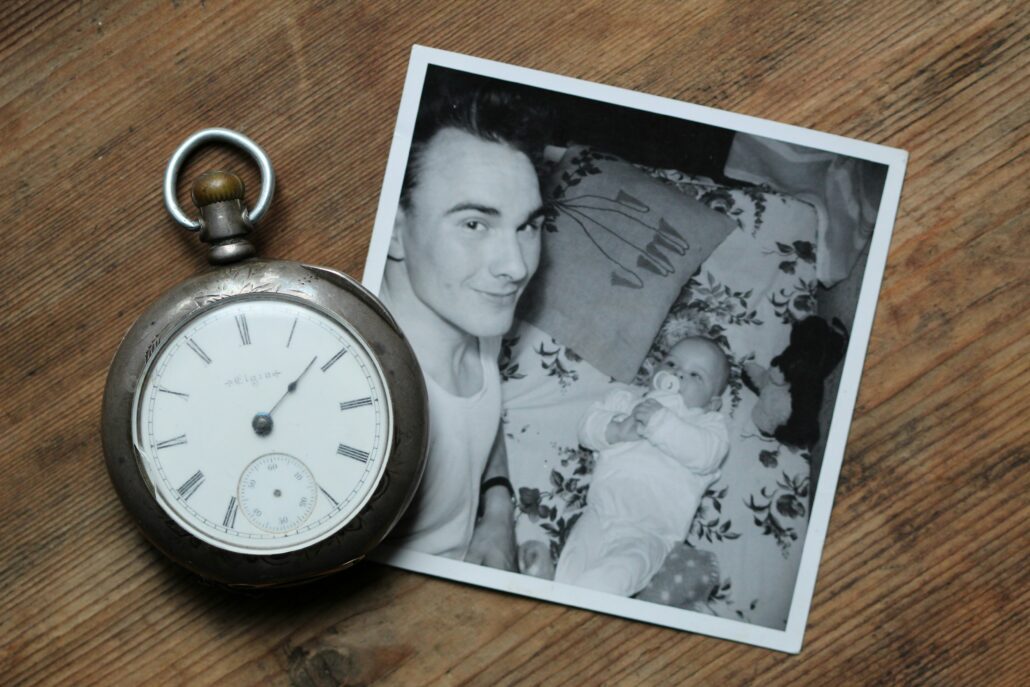
When Will I Know It’s Time? The Dilemmas of Moving a Loved One with Dementia into a Care Community.
This workshop is designed for anyone who is concerned that they may one day have to make the agonizing decision to move a loved one living with dementia into a care community, and the dilemmas that care partners and families often face when confronted with this emotionally-loaded aspect of caregiving.
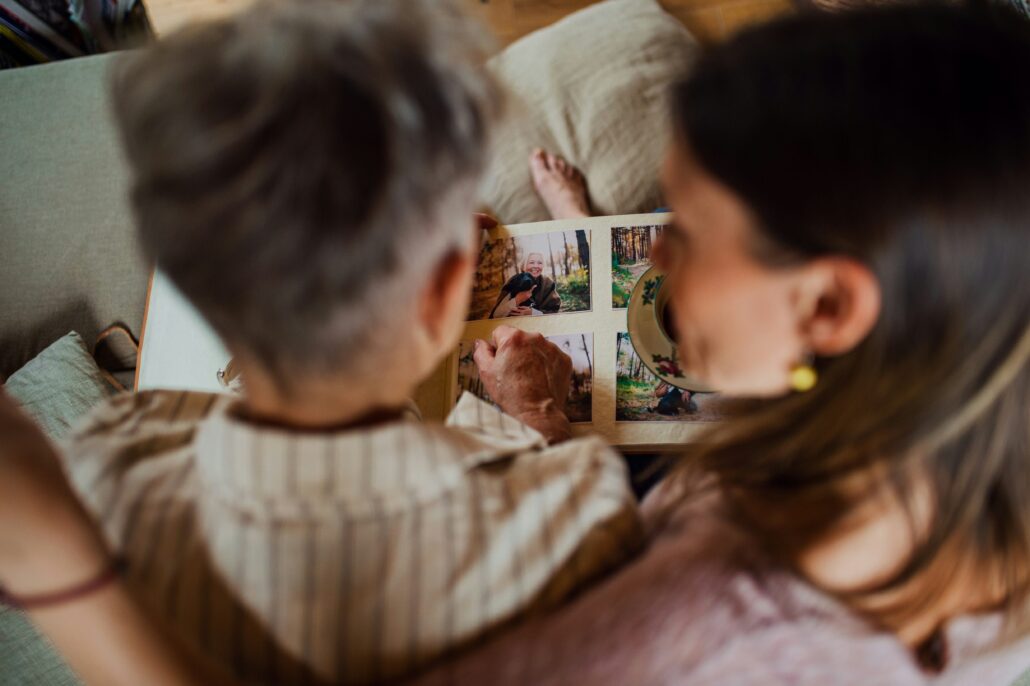
While There’s Still Time: Facilitating Emotional Healing and Closure Among People Living with Dementia.
This workshop is built around a case study which explores the importance of timely psychosocial interventions among people living with dementia and other life-limiting illnesses.
Learn more
The content allows for deep discussion about complex family dynamics that can take place, and how to facilitate meaning-making and emotional healing for cognitively impaired individuals while they can still actively participate in the process.